Where it fits
The question that follows electromagnetic design — will it hold
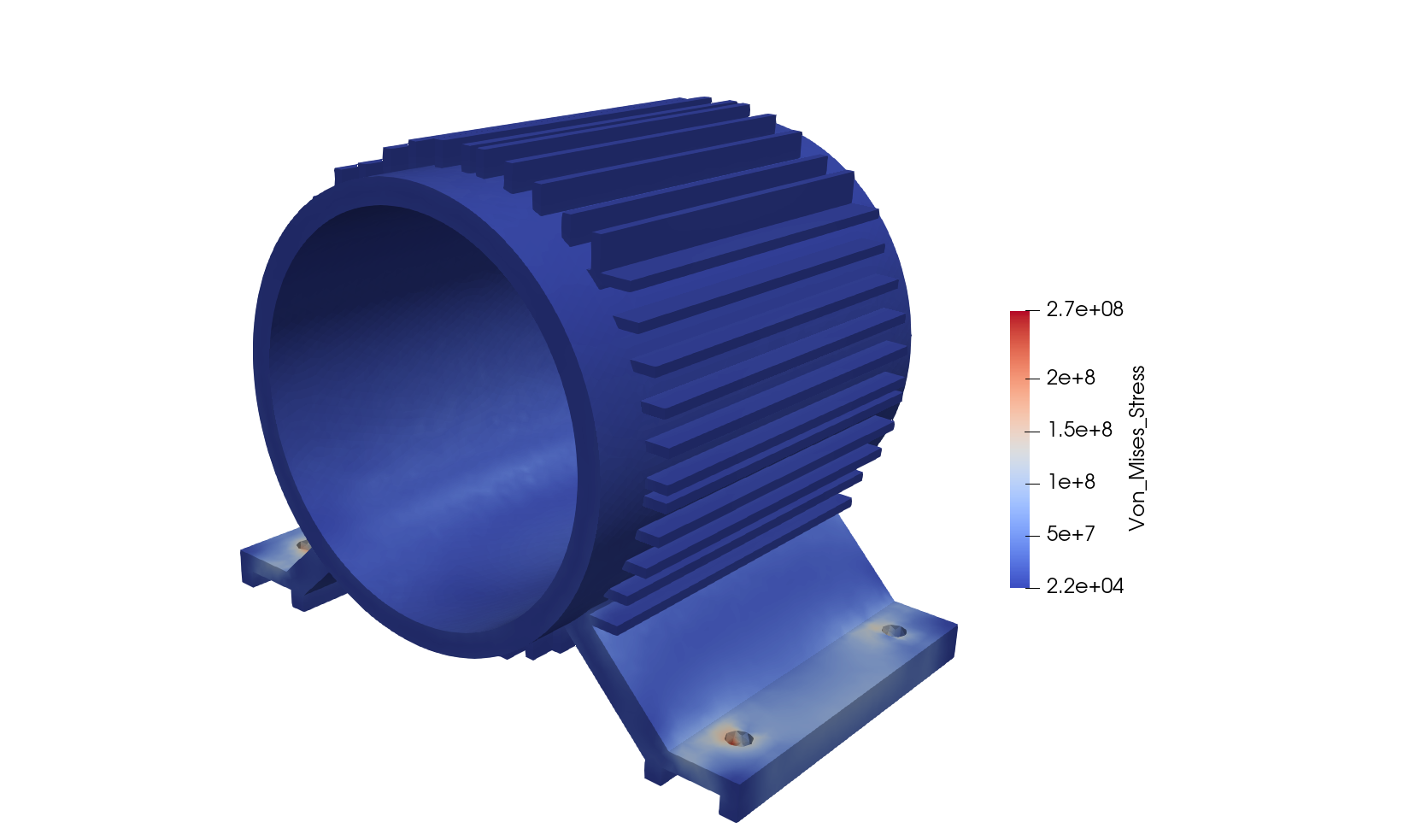
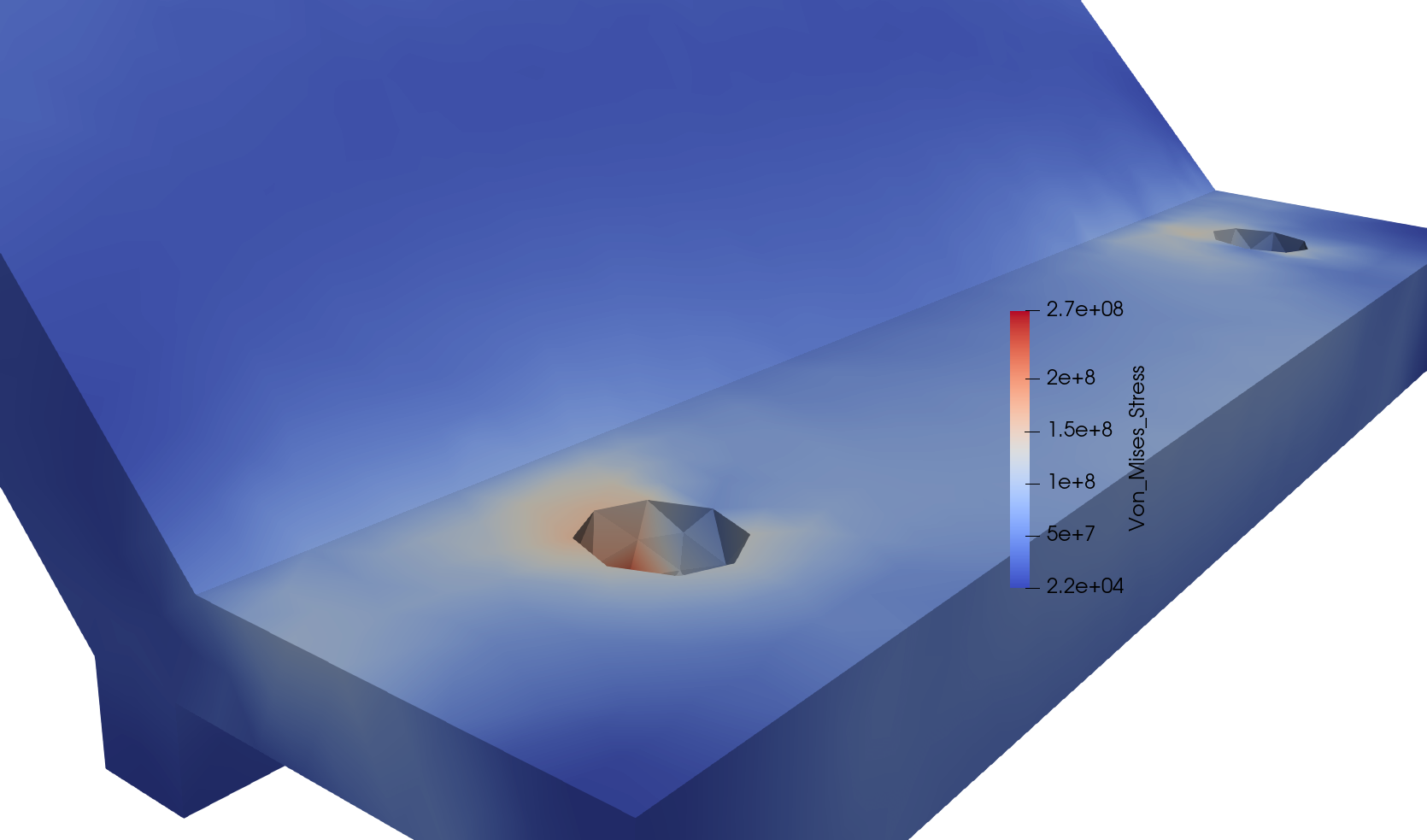
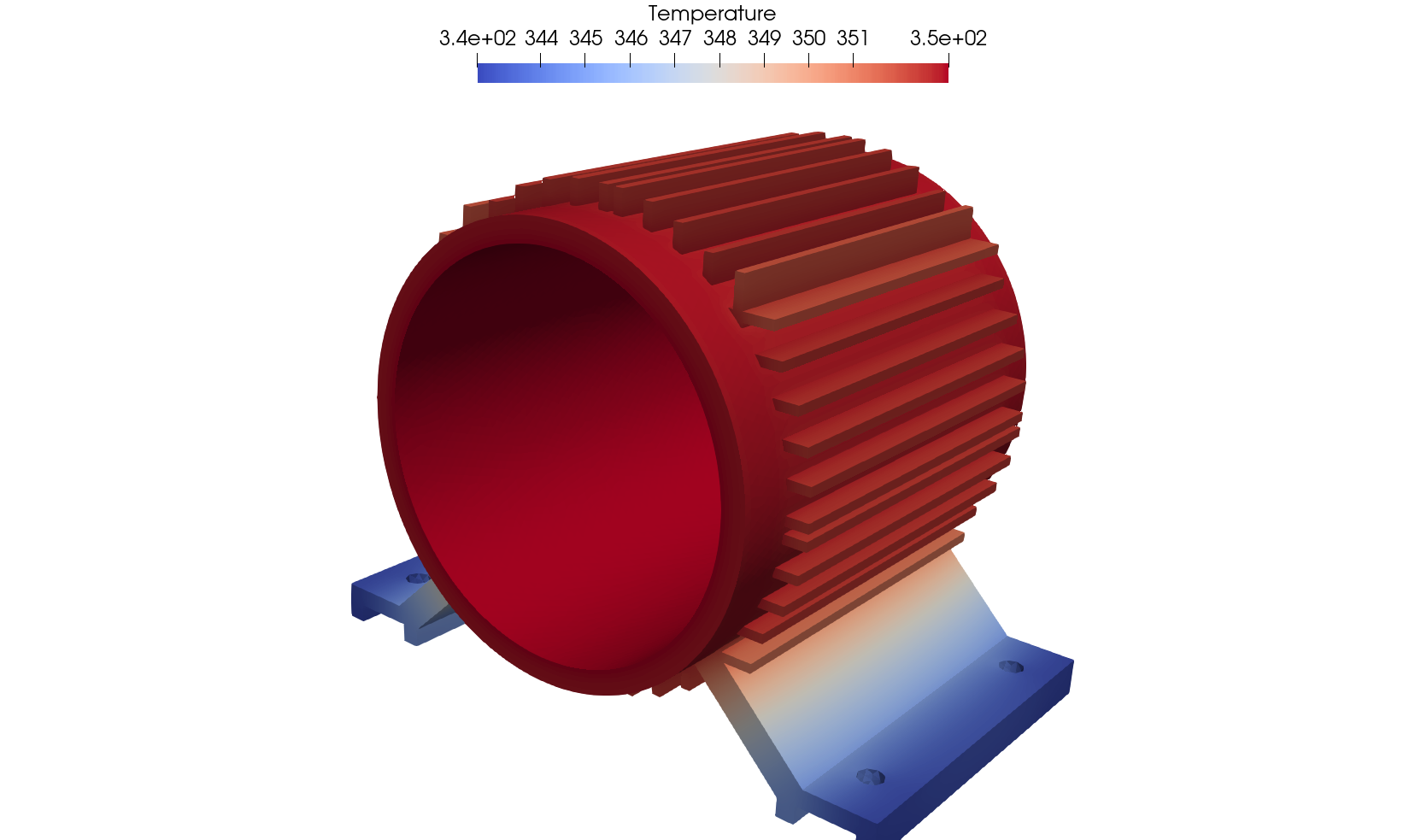
Where Indux MEC settles the electromagnetic design through magnetic equivalent circuits, Indux Mechanical verifies that result structurally and thermally. It is specialised for electric machines but works for general mechanical components too.
Analysis engine
Indux Mechanical SolverThe compute engine that solves the structural (FEA) and heat transfer (FEM) governing equations. Supports OpenMP and MPI parallel computation.
Pre-processor
Indux Mechanical DesktopHandles CAD import, meshing, and material and boundary condition setup.
Capabilities
What it analyses
- Static — linear and nonlinear (Newton–Raphson)
- Dynamic — Newmark-β
- First and second order elements — Tetra4/10, Hexa8/20, Penta6/15
- Steady-state and transient
- Isothermal, heat flux, convection and volumetric heat generation boundary conditions
- One-way thermal–structural coupling (Heat → FEA)
- Tied, frictionless and frictional (Coulomb) contact
- Multi-material assemblies
- Linear elastic and hyperelastic (Neo-Hookean and others)
- 2D topology optimisation — SIMP with density filter
- OpenMP and MPI parallel computation
Validation
Eight canonical cases compared directly against closed-form solutions
To confirm the solver solves the governing equations correctly, results were compared against closed-form solutions published in the literature. This is theoretical verification requiring no measured data, and it also checks that refining the mesh reduces the error at the theoretically expected convergence order.
4
2
1
1
Relative error below 1% on smooth (non-singular) verification quantities, with the observed mesh convergence order approaching the theoretical value.
Single maximum values at points where stress theoretically diverges — boundary-condition corners, constrained edges — are not trusted. Judgement uses interior values, medians and profiles instead.
Current status
This product is still in development
DEV The canonical-case verification passes, but the public feature set and support scope are not yet settled. The plan is a workflow that takes the electromagnetic design result from Indux MEC and verifies structural and thermal performance; for now we work through technical review and limited PoC.